THE PRACTICAL GUIDE
Focus: what size crate for TPLO recovery, dog crate bed for crate rest after surgery
Why are generic crate charts not enough?
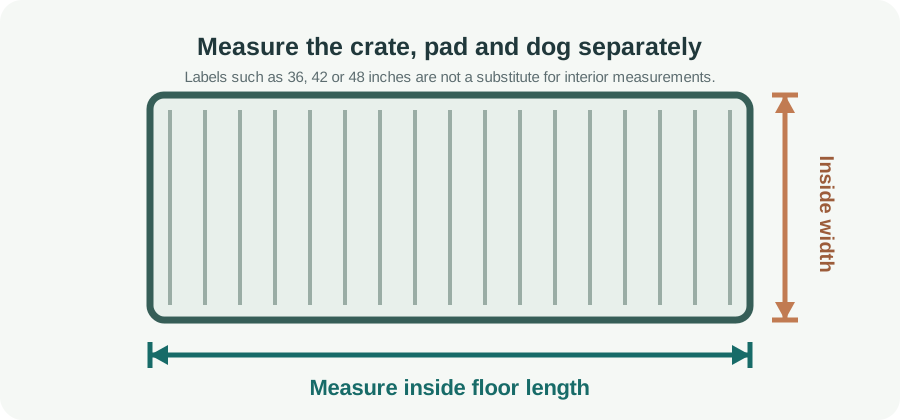
Crate brands measure products differently, and dogs of the same weight can have very different body proportions. A 42-inch label does not guarantee a particular interior floor measurement. For a post-operative dog, the exact fit matters more than the size printed on the carton.
How should you measure?
- Measure the dog from nose to the base of the tail while standing, then observe the dog lying in its natural, comfortable position.
- Record the usable lying length and width. Do not force a painful limb into an extended position.
- Measure the crate’s inside floor length and width, accounting for door hardware, rounded corners and interior dividers.
- Compare the pad’s actual sleeping surface—not its outside seam dimensions—with the crate floor.
- Check that the finished pad does not bunch, curl or obstruct the doorway.
How should the crate fit?
Use the enclosure size specified by the treating team. Do not use a generic “large enough to pace” rule or intentionally squeeze the dog into a tiny crate. Ask the clinic to confirm the correct crate or pen dimensions for your dog, especially if the dog needs assistance to stand, turn or reposition.
What if the dog is long-bodied?
For a Dachshund or another long-bodied dog, measure the dog’s own resting footprint rather than relying on a weight-based chart. The bed should support the torso along its natural length. If a standard pad leaves the shoulders or hips unsupported, compare a longer pad only if it still fits the approved enclosure. Do not improvise with folded blankets that create ridges or uneven layers.
How much clearance should the pad leave?
There is no universal inch allowance that works for every crate model. The pad should lie flat and the crate door should close normally. A product that must be compressed, folded or forced into place is the wrong size. If the pad covers a latch or creates a raised edge, choose another option.
What should you ask the clinic?
- Which exact confinement area is allowed: crate, kennel, pen or small room?
- What interior dimensions are suitable for this dog?
- Does the dog need space for a sling, support or prescribed equipment?
- Are there restrictions on bed thickness or entry height?
For the bed features themselves, see the TPLO recovery-bed buying guide . Owners comparing spinal-recovery bedding can also visit IVDD Recovery Bed for a separate condition-specific guide. For a broader overview, return to the TPLO recovery guide .
What is the practical measuring sequence?
Measure the crate interior first, then the dog, then the candidate pad. Use a tape measure rather than a product label. Record inside length, inside width, door opening height and any internal corner or latch that reduces usable space. Measure the dog in a natural lying posture rather than while standing at attention.
| Measurement | How to record it | Use it to check |
|---|---|---|
| Crate floor length | Inside wall to inside wall at floor level | Whether the pad fits without bowing or curling |
| Crate floor width | Inside side wall to side wall at the narrowest point | Whether the pad blocks the door or overlaps edges |
| Dog lying length | Nose to rump while resting naturally | Whether the usable surface accommodates the dog’s normal posture |
| Dog lying width | Widest relaxed body position | Whether the dog can settle without hanging over the edge |
| Entry clearance | Door opening and finished pad height | Whether the pad interferes with the door or threshold |
Why should you avoid a universal weight-to-crate chart?
Weight alone does not tell you body length, shoulder width, posture, crate model or the amount of room the veterinary team intends the dog to have. Two dogs at the same weight can have very different body shapes. Generic size charts are a starting point for shopping—not a substitute for measuring and checking the discharge plan.
How do you check the fit after adding bedding?
Recheck the crate with every layer in place. A waterproof barrier, washable cover and pad all add thickness and may create folds or reduce headroom. The door should close normally. The bed should remain level and should not slide, bunch or curl under the dog. If the completed stack changes the enclosure or makes entry awkward, ask the care team before using it.
What if your dog has a long body or unusual proportions?
Measure the individual dog rather than relying on breed stereotypes. Some dogs need a longer sleeping surface; others need more width. A breed name does not guarantee a standard body length. Use the actual lying measurements and the dimensions of the exact crate model.
Suggested buying options
This crate-bed option is included for owners comparing a fitted, low-profile mat. Measure the crate interior and your dog in a natural resting position; do not rely on breed or weight alone.
Affiliate disclosure: TPLO Dog Bed may earn a commission from a qualifying purchase through these links, at no additional cost to the reader. Commission availability does not determine editorial selection.
Product listings, sizes, prices and stock can change. Check the exact listing and follow your surgeon’s bedding and confinement instructions.
Veterinary and reference sources
- American College of Veterinary Surgeons: Cranial Cruciate Ligament Disease
- Cornell University College of Veterinary Medicine: TPLO recovery overview
- American College of Veterinary Surgeons: Postoperative Care After Surgery
- American College of Veterinary Surgeons: Canine Hip Dysplasia (hip replacement aftercare context)
- VCA Animal Specialty Group: TPLO recovery and follow-up care
Sources provide clinical context. This site does not provide individualized medical advice or replace discharge instructions.