THE PRACTICAL GUIDE
Focus: waterproof dog bed for after surgery accidents, waterproof dog bed liner after surgery
What is the difference between waterproof and water-resistant?
“Water-resistant” usually describes limited resistance to moisture; it does not necessarily mean liquid cannot reach the foam. For a mattress that needs full liquid protection, look for a clearly described waterproof liner or membrane and check whether seams, zipper areas and the underside are protected. Ask the seller for the actual construction details rather than relying on a badge.
How can you build a practical bedding stack?
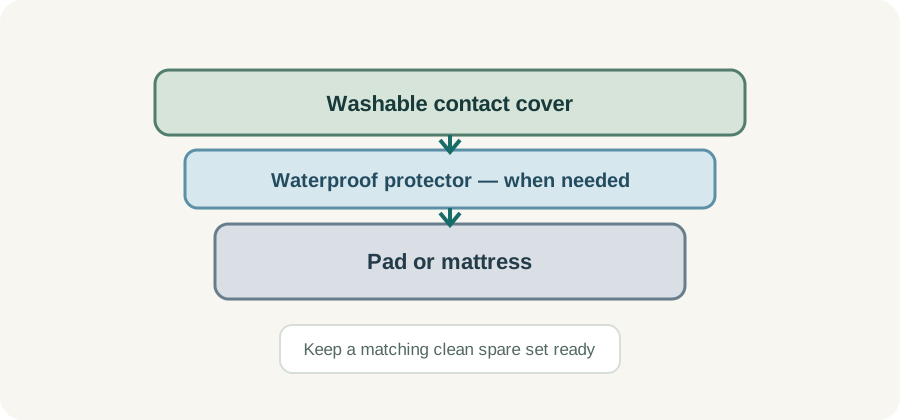
| Layer | Purpose | What to check |
|---|---|---|
| Mattress or recovery pad | Provides the resting surface | Correct dimensions, stable fit and appropriate height. |
| Waterproof protector | Helps shield the mattress if moisture is expected | Waterproof construction, fit and ease of removal. |
| Washable top cover | Creates the surface the dog actually lies on | Wash instructions, seams, drying time and replacement availability. |
| Spare clean set | Allows a quick change during laundry | Second cover and protector that fit the same pad. |
How many spare covers are useful?
At minimum, having one clean spare top cover makes a routine wash easier. If the dog has frequent accidents or discharge instructions require frequent changes, ask the care team whether a second complete protector-and-cover set is sensible. The correct frequency depends on the dog and the care plan; do not treat weekly washing as a universal clinical rule.
What should you avoid?
- A loose plastic sheet that wrinkles, slides or becomes a chewing hazard.
- A fitted liner that compresses the pad or changes the entry height.
- A cover that cannot be removed without lifting or twisting the dog against instructions.
- Leaving damp fabric against the skin or incision area.
Do you need waterproof bedding after every surgery?
No. A protective layer is useful when accidents, wound drainage, wet compresses or other care needs make moisture protection relevant. Check the discharge notes and ask before adding any layer that could affect comfort, heat retention or the surgical site.
For product-selection criteria, visit the TPLO bed buying guide . For the overall setup, read the main recovery guide .
How can you build a bedding stack that is easy to reset?
Think of the bed as a system with separate jobs: a supportive base, a protective layer when needed, and a washable surface the dog actually touches. The order and materials should suit the dog’s discharge instructions, incision location and any bandage or dressing. Never place a noisy, crinkly or poorly secured sheet where it can bunch under the dog.
What should you ask before adding a waterproof cover?
Ask whether the incision or dressing must stay dry, whether a liner can be placed beneath the top cover, and whether any material could rub or trap moisture. A waterproof liner protects the mattress; it does not replace a clean, dry layer against the dog. Follow the product’s wash and drying directions so the liner does not crack, peel or lose its seal.
How many spare layers are practical?
One complete spare top cover is a useful starting point for many households. If the dog has repeated accidents or the care team expects frequent bedding changes, ask whether a second full set is appropriate. Keep used layers separate from clean ones and let each part dry fully before reassembly.
What should you do if the incision or a bandage gets wet?
Do not improvise wound care from a bedding article. Contact the surgical team and follow its instructions. The ACVS advises keeping surgical incisions and bandages clean and dry and contacting the veterinary team when a bandage becomes wet, shifts, smells unusual or the skin changes.
Suggested buying options
These are protective bedding layers, not orthopedic mattresses. Use them only as a washable top or floor-protection layer that fits the underlying bed and does not bunch or slip.
Affiliate disclosure: TPLO Dog Bed may earn a commission from a qualifying purchase through these links, at no additional cost to the reader. Commission availability does not determine editorial selection.
Product listings, sizes, prices and stock can change. Check the exact listing and follow your surgeon’s bedding and confinement instructions.
Veterinary and reference sources
- American College of Veterinary Surgeons: Cranial Cruciate Ligament Disease
- Cornell University College of Veterinary Medicine: TPLO recovery overview
- American College of Veterinary Surgeons: Postoperative Care After Surgery
- American College of Veterinary Surgeons: Canine Hip Dysplasia (hip replacement aftercare context)
- VCA Animal Specialty Group: TPLO recovery and follow-up care
Sources provide clinical context. This site does not provide individualized medical advice or replace discharge instructions.